

 The plugin registers its own Harness tools and provider. It does not install or invoke
 modellix-cli at runtime.
This page covers the DeepSeek Harness plugin. For the Open Plugins package used in Claude Code, Codex, and Cursor, see Plugin. To add only the LLM gateway by hand—without media or Web tools—see DeepSeek Harness.
Harness and this plugin currently use prerelease interfaces. Check the plugin CHANGELOG and peer dependencies before upgrading Harness.
What the Plugin Provides
You can turn Design, LLM, and Web on or off independently in Modellix settings.
Requirements
- DeepSeek Harness
0.1.1-rc.2 - Node.js
^22.19.0or>=24.0.0for the published package - A Modellix API key
Install
Install the package in the Harness Web profile, inspect the merged configuration, then start or restart that profile:--dump-config should contain the dsh-modellix bundle layer and a plugin row with id modellix. Replace web if you use another profile. Restart the running profile after you install or update the plugin.
To install a trusted local build from a clone of dsh-modellix:
Configure the API Key
Create or copy a key in the Modellix Console before you connect the plugin.1
Open Connect Modellix
Start the Harness Web UI. On first use, open Connect Modellix.
2
Enter Your Key and Enable Services
Enter a valid Modellix API key. Keep Design, LLM, and Web enabled unless you intend to turn one capability off.
3
Save and Verify
Choose Save and enable. Then open Settings → Modellix and confirm that the Credential status and LLM catalog are healthy.The stored key is write-only. After save, the UI shows status and source, never the key itself.
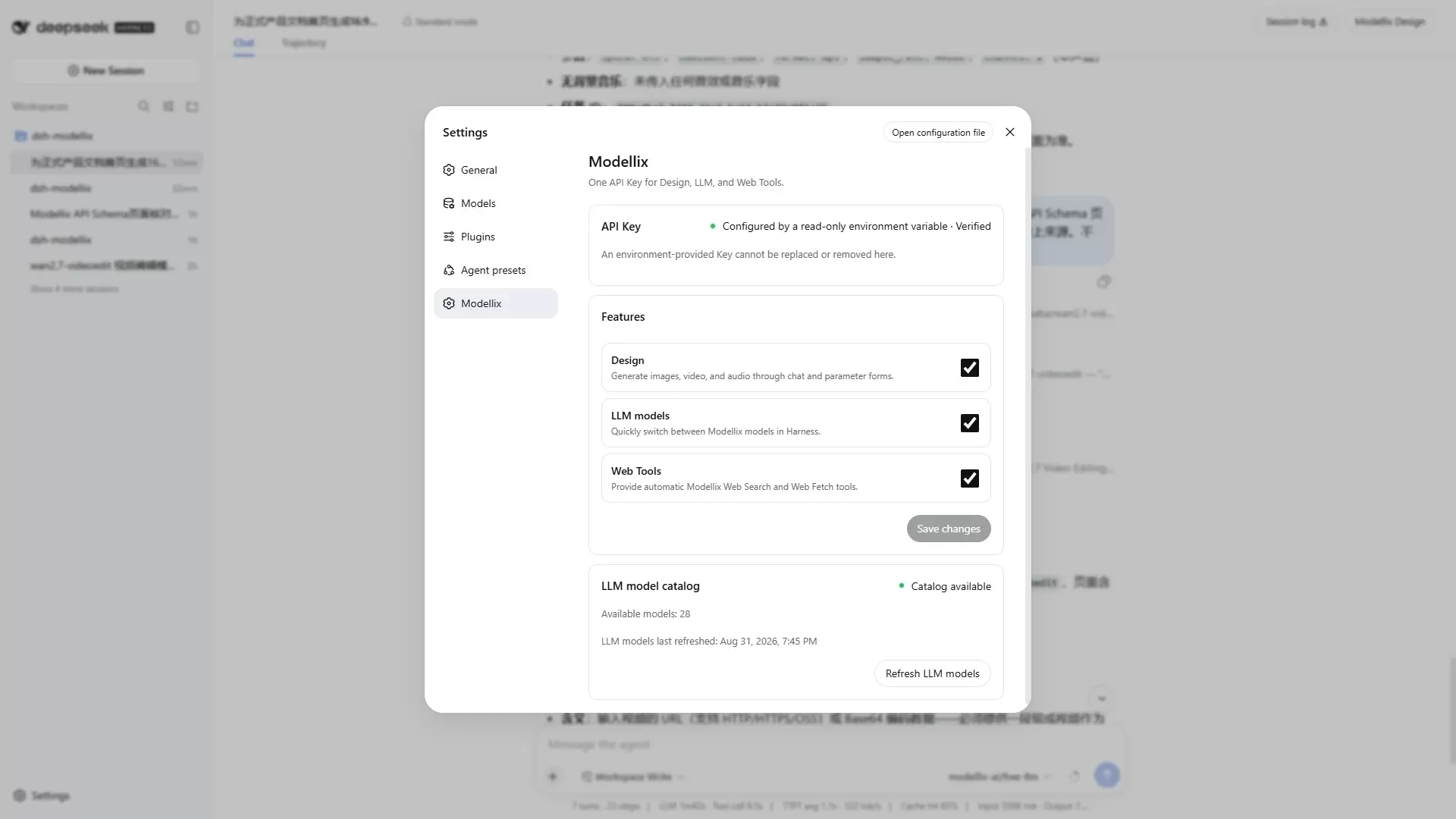 Alternatively, provide
 MODELLIX_API_KEY in the Harness launch environment. Environment credentials are read-only in the UI and require a Harness restart after you replace the value.
Select Configure later only when you want to postpone setup. The plugin stays unavailable and asks again the next time you use an enabled Modellix capability.
Use Modellix LLM Models
When LLM is enabled, the plugin reads the live catalog and adds those models to the Harness model selector.1
Keep LLM Enabled
In Settings → Modellix, leave LLM on. Check catalog status and count, or choose Refresh if the list looks stale.
2
Pick a Modellix Model
Open the Harness model selector and choose a model in the Modellix group. Send the next Agent turn.
0. If the catalog cannot load, the plugin does not fabricate model entries.
Full Model IDs and rates: Models & Pricing.
Create Media in Chat
Describe the outcome in the conversation. You do not need to name tools or walk through a catalog first.- Search the live media catalog when a compatible model is not already known.
- Read that model’s live API schema and use only published fields and values.
- Reuse the latest relevant result URL for edit, image-to-video, or video-to-video follow-ups instead of starting a new text-to-media task.
- Upload a session attachment or a workspace file when the schema requires a public media URL.
- Submit the generation once. An unknown submission outcome is never replayed automatically.
- Check the task once in the same turn. A background watcher updates the existing result card when the job finishes.
Result Cards and Modellix Design
- While a task is running or has failed, the chat card shows a concise header and status. Preview and JSON appear only after success.
- A successful card updates in place with Preview and JSON tabs, image enlargement, and native video or audio players.
- One task maps to one card. A later result lookup does not create a duplicate.
- The right-side Modellix Design panel lists only tasks from the current Harness conversation.
- Add URL to chat appends the selected resource URL to the composer so you can edit or transform it. Download opens the upstream file.
- Result URLs follow the upstream expiry. If the API does not provide one, the plugin applies a seven-day local display limit. It does not keep a permanent media copy.
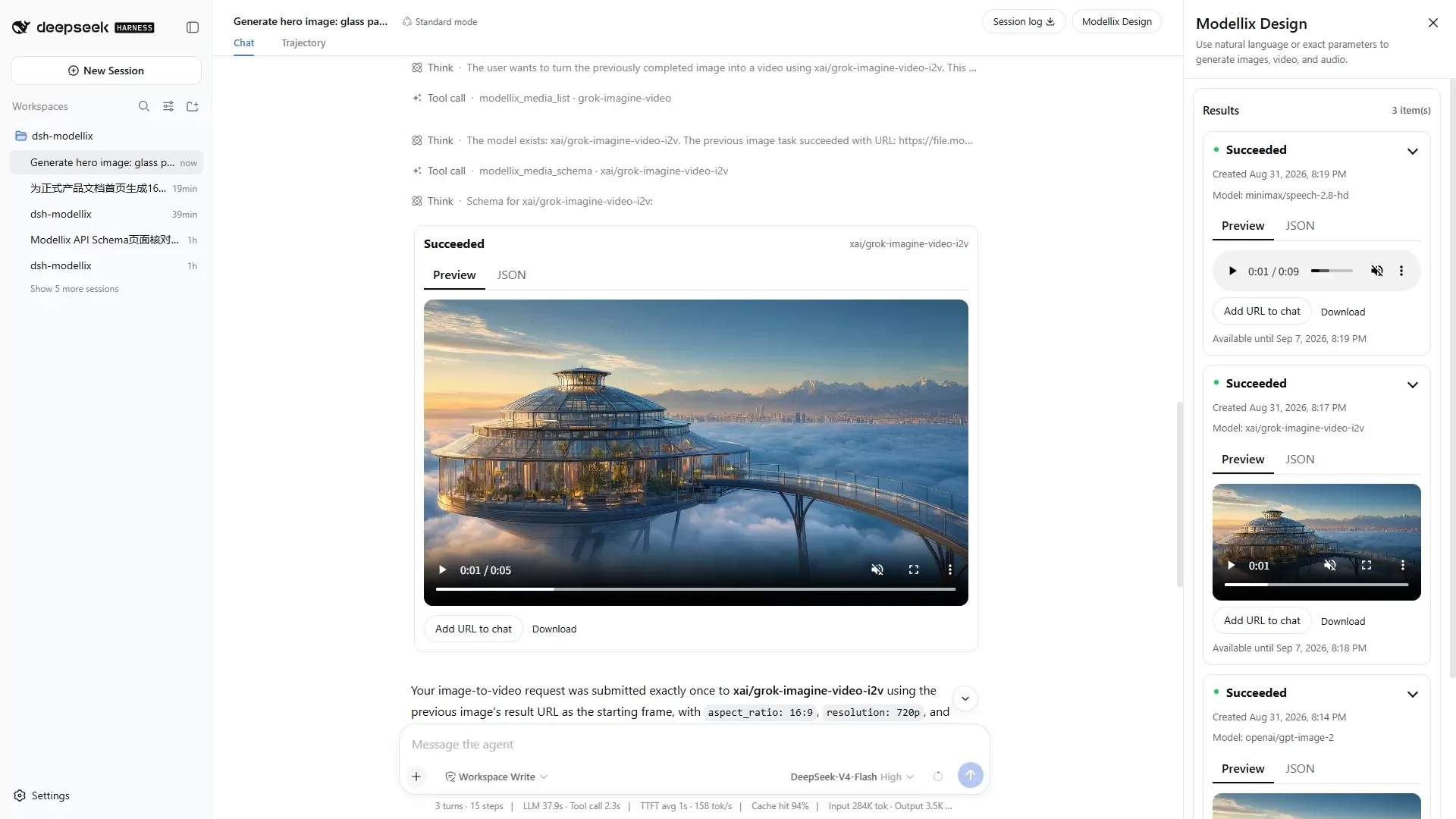
Design must stay enabled for media tools, chat result cards, and the result panel. Turning Design off removes those tools from the Agent.
Search and Fetch the Web
Ask the question normally. You do not need to say “use search” or “use fetch.”modellix_web_search. When you provide a public URL, or a search result needs the full page, it calls modellix_web_fetch. Failed or unknown Web requests are not repeated automatically.
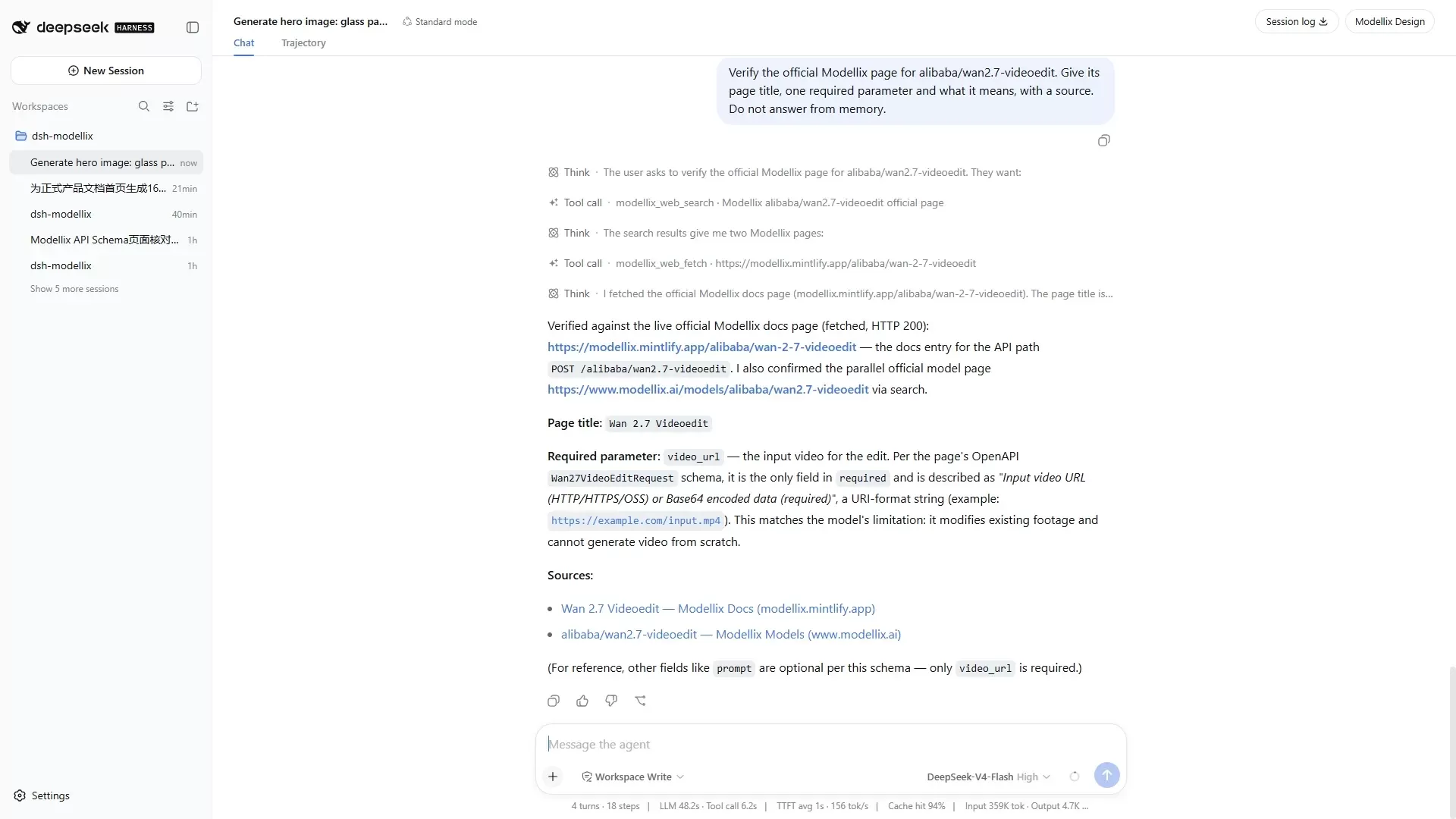 If you explicitly ask the Agent not to browse, it does not call these tools. Web must stay enabled in Modellix settings.
API reference: Web Search · Web Fetch.
If you explicitly ask the Agent not to browse, it does not call these tools. Web must stay enabled in Modellix settings.
API reference: Web Search · Web Fetch.
Settings and Recovery
The Modellix settings section shows:- Credential configured or verification status, and whether the source is a saved key or
MODELLIX_API_KEY - Replace and remove actions for a writable local credential
- Independent Design, LLM, and Web switches
- Live LLM catalog health, model count, refresh time, and a manual refresh
401 marks a credential invalid. Other failures keep their own recovery states:
Troubleshooting
Uninstall
Remove a writable local key in Modellix settings first, or revoke an environment credential in your secret manager. Then remove the plugin and restart the profile:Next Steps
DeepSeek Harness LLM Setup
Add Modellix as a custom provider without the plugin.
LLM Models and Pricing
Review Model IDs and rates for the live catalog.
REST API
Call media models directly with submit-and-poll.
Web Search and Web Fetch
Use the same Web tools outside Harness.